
Community Action Poverty Simulation
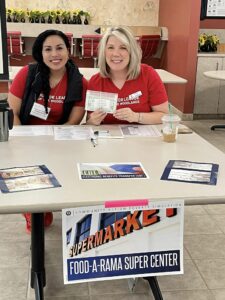
When experiencing the CAPS program, attendees interact with various community resources, including the local grocery store.
An important part of advocating for those in Montgomery County involves being informed. Junior League of The Woodlands, Inc. invites local nonprofit agencies and volunteer groups to participate in or allow us to host a Community Action Poverty Simulation (CAPS) for your organization.
The Community Action Poverty Simulation is a profoundly moving experience. It moves people to think about the harsh realities of poverty and to talk about how communities can address the problem. Most importantly, it moves people to make a difference. The Community Action Poverty Simulation is the first step to get people and communities moving.
The Community Action Poverty Simulation© was developed to help raise awareness about different aspects of poverty. Missouri Community Action Network is the copyright owner of Community Action Poverty Simulation (CAPS). Junior League of The Woodlands (JLTW) is a CAPS Licensee. Poverty Simulations hosted by Junior League of The Woodlands, Inc. are conducted solely for educational purposes and under the direction of trained CAPS Facilitators.
Why a Simulation?
Poverty is a reality for many individuals and families. But unless you’ve experienced poverty, it’s difficult to understand truly. The Community Action Poverty Simulation (CAPS) bridges that gap from misconception to understanding. CAPS is an interactive immersion experience. It sensitizes community participants to the realities of poverty.
CAPS is not a game. It is based on real Community Action clients and their lives. CAPS exists to:
- Promote Poverty Awareness – Role-play a month in poverty during the simulation and experience low-income families lives.
- Increase Understanding – After the simulation, you will unpack your learning and brainstorm community change.
- Inspire Local Change – Together, you can be a voice to end poverty in your family, friends, and community.
- Transform Perspectives – The goal of CAPS is to shift the paradigm about poverty away from being seen as a personal failure and toward understanding poverty as structural, a failure of society.
How the Poverty Simulation Works
The Community Action Poverty Simulation breaks down stereotypes by allowing participants to step into the real-life situations of others. Poverty is often portrayed as a stand-alone issue – but this simulation allows individuals to walk a month in the shoes of someone who is facing poverty and realize how complex and interconnected issues of poverty really are.
- A single parent with limited resources and no transportation must find a way to get to work and get their child to daycare.
- An elderly person must find a way to pay for utilities and medication.
- A young adult must care for siblings while their parent is incarcerated.
- An elderly couple must raise their grandchildren and deal with their health and employment issues.
After the experience, individuals then have the opportunity to discuss what they’ve learned with their peers. The Community Action Poverty Simulation is a tool that helps participants rethink the challenges that millions of low-income individuals face daily.
More importantly, this tool helps people identify areas of change that can directly impact the effects of poverty on individuals, families, and communities.
Living a Month in Poverty...
The simulation involves participants who take on the roles of members of up to 26 families, all facing various challenging but typical circumstances.
Each family is given a card explaining its unique circumstances to start the simulation exercise. The families then provide food, shelter, and other necessities by accessing various community resources during four 15-minute “weeks.”
In addition, about 20 volunteers – play the roles of resource providers in the community.
The Community Action Poverty Simulation is conducted in a large room. Participants are seated in family groups, and community resources are located at tables around the perimeter of the room. The facilitator opens the simulation with an orientation to the activity, goes over ground rules, and answers participant questions during the exercise.
The activity lasts about three hours. This time frame includes an introduction and briefing by the facilitator, the simulation exercise, and a guided debriefing in which participants and volunteers share their observations and insights from the activity.
Are CEUs Available?
At the end of the session, Junior League of The Woodlands will provide all attendees a Certificate of Completion to submit for three (3) community service hours or three (3) Continuing Education credits. The National Social Work Association often recognizes poverty simulations as approved professional Continuing Education opportunities. However, all participants are encouraged to consult their employers/professional associations for current guidelines.